

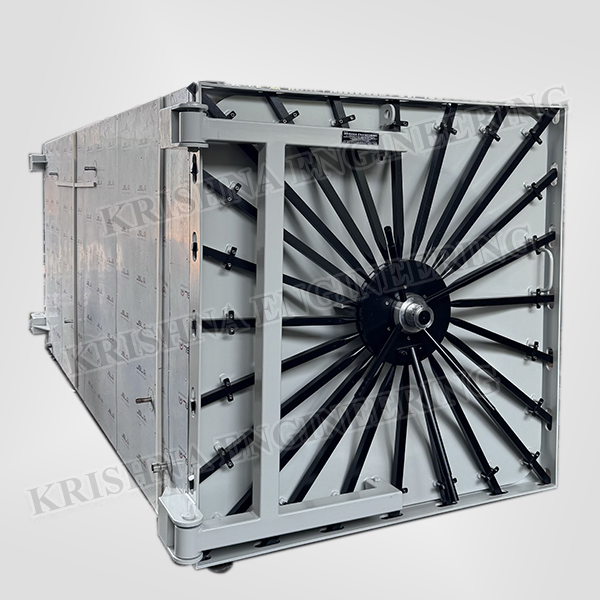
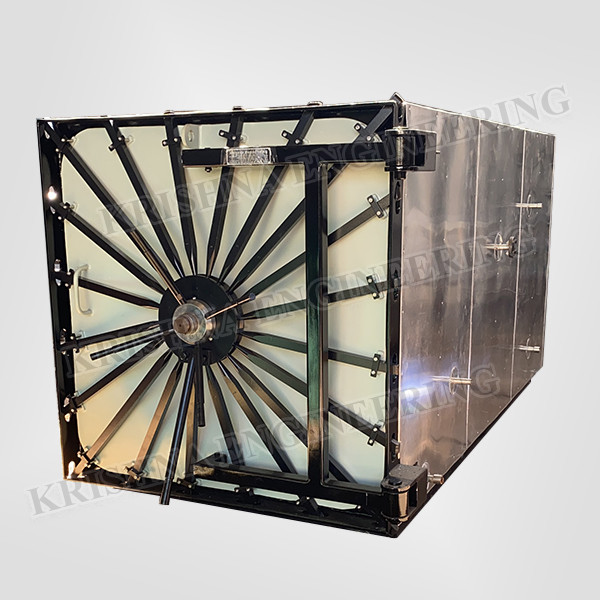
Selecting the right sterilization equipment will be critical if you’re planning to sterilize medical devices, pharmaceuticals or other similar products. A Single Door ETO Sterilizer makes use of ethylene oxide gas to sterilise products which are compatible.
Before investing, you’ll want to consider what chamber size you require, what operating conditions are needed, what automation you require, what safety features you require and the nature of the products being sterilised. Krishna Engineering produces and exports ETO Sterilisers which can be tailored to suit your requirements. This will help you find the most suitable equipment to fit your production.
What is a Single Door ETO Steriliser?
An ETO Steriliser is a sterilisation chamber which makes use of ethylene oxide to remove microorganisms from compatible products. It’s often chosen for products that are sensitive to heat or moisture.
- Medical Devices – catheters, syringes, dressings and other compatible medical devices.
- Pharmaceuticals – suitable products and materials.
- Laboratories and Healthcare – suitable instruments and materials.
- Specialist Industries – suitable products that cannot be sterilised well with other processes.
It will be extremely important to consider what material your product is made from, what packaging it has, how it will be loaded and what validated process you’ll require. Not all products will be compatible with ethylene oxide so it’s important to consider what you’re trying to sterilise.
How does a Single Door ETO Steriliser Work?
An ETO Steriliser works by using a process to sterilise compatible products. The process itself will vary depending on the equipment, type of product and validated process.
The general steps would be:
- Preconditioning – products will be prepared in a controlled environment.
- Air Removal – the chamber will be set up to suit the process of the equipment.
- Gas Introduction – ethylene oxide will be added.
- Sterilisation – products will then be exposed to the gas.
- Gas Removal and Aeration – Gas will be removed from the chamber and products will be aerated. This process should be developed and validated for the products you wish to sterilise. You’ll also want to consider what temperature, pressure, humidity, gas levels and exposure times you’ll need. As ethylene oxide is a hazardous chemical it’s important to have good monitoring and safety measures in place.
Things To Consider When Choosing A Single Door ETO Steriliser
Choosing the right equipment to suit your needs will not just be about finding the right chamber size. Consider the following:
1. Chamber Size
This will depend on how much, what size and how they will be loaded per batch. The chamber must be large enough to fit all the products you’ll be sterilising whilst still allowing proper gas flow.
Speak to your manufacturer to see what internal chamber size they can offer, usable chamber size, how the products will be loaded (trays/trolleys if applicable), typical batch size and future requirements and what space you have available.
Krishna Engineering has ETO Sterilisers with various chamber sizes and can be tailored to suit your requirements. Check what chamber sizes are available for your single door requirements.
2. Product Compatibility
Not all materials will work with ETO Sterilisation. If you’re looking to sterilise plastics, polymers, packaged medical devices etc. you may need to consider specific conditions.
Before choosing your Steriliser consider the materials you’re sterilising, what packaging they have and what compatibility they have with ethylene oxide. You’ll also need to know what levels of residue are acceptable and what aeration is required.
The chosen equipment and process should suit your product and regulatory requirements.
3. Temperature, Pressure & Process Control
Having good temperature and pressure control will ensure your equipment runs smoothly. This will depend on your product, how they are loaded and what process you’re using.
Ensure the system can offer good controls and monitoring of the process. You’ll also want to know what records are kept of the process.
Krishna Engineering has ETO Sterilisers with temperature control, automated controls and monitoring. Check what controls they can offer, what ranges they work within and what records can be kept.
4. Door Design
If you’re looking to load/unload from one side a single door may be ideal. Consider what space you have available, how you’ll be moving your products and what your process will be.
Take into account the space available for door opening, loading the products, types of locks that are available, and moving the products. In case the loading and unloading areas should be separated, then there will be a need for another door arrangement.
5. Safety Features
As ethylene oxide is a hazardous chemical it’s important to consider what safety features are available.
Ensure the system has the following features:
- Door Interlocks & Locking
- Pressure Monitoring & Alarms
- Gas Leak Detection (if applicable)
- Controlled Gas Removal & Aeration
- Monitoring & Access Controls
- Ventilation, Gas Handling & Emergency Requirements
Consider what safety features you’ll have at the end of the process. This should be based on your risk assessment and any regulations. Not all models will have all the features so ask your manufacturer what specification they can offer.
6. Automation, Records & Maintenance
Automation can help ensure your operators follow the correct settings during the process. However, this does not mean the process will be validated, your operators will not need training and regular maintenance will not be required.
Ask what automation is available, what records can be kept, what manuals are available, what support can be offered during installation, what spares are available and what validation documents are available. This will help you determine if the equipment can fit into your processes.
How to Choose the Right ETO Steriliser for Your Facility
Use the table below to help decide what equipment to choose.
Consideration | Item To Consider |
Product Type | Materials, Packaging & Compatibility |
Chamber Size | Batch Size, Size & Future Requirements |
Process Conditions | Temperature, Pressure, Humidity & Exposure |
Door Type | Loading, Space & Process |
Safety Features | Interlocks, Alarms, Gas Handling & Aeration |
Automation | Monitoring, Controls & Records |
Compliance | Standards & Validation Documents |
After Sales Support | Installation, Maintenance & Spares |
A suitable Single Door ETO Steriliser should be based on your actual process requirements. Speak to your manufacturer and tell them what products you have, how many you expect to sterilise per batch and what your process will be like to find the most suitable setup.
Why Choose Krishna Engineering?
Krishna Engineering is based in Ahmedabad and produce and export ETO Sterilisers and other sterilisation equipment. We’ve been in business since 2000 and can offer various steriliser setups including bespoke chamber sizes.
Consider the following:
Bespoke Setup
speak to them about what chamber sizes and equipment setups they can offer.
Material
confirm what material is suitable for the chamber.
Experience
they have been producing and exporting sterilisation equipment since 2000.
Automation & Monitoring
check what controls and safety features are available.
Product Type
Tell them what products you have, how many you expect to sterilise per batch and what process conditions you have to help determine the most suitable setup.
Ask for a detailed technical quote containing all the information about the design, specification, safety features, records, installation and support.
FAQ
Products which are compatible with ETO may include medical devices, certain pharmaceuticals and selected heat sensitive materials. It will depend on the material, packaging and validated sterilisation requirements.
Consider how big the products are, how many you’re sterilising per batch, how they will be loaded and what future requirements you have. Confirm with your manufacturer what usable chamber size they can offer.
Depending on the design and application it should have features such as door interlocks, pressure monitoring, alarms, gas leak detection. The final equipment should meet your safety and regulatory requirements.
Not necessarily. If you’re looking to load/unload from one side a single door model may be suitable. If you need to keep the clean and unprocessed areas separate you may need a different model.
Conclusion
Choosing the right Single Door ETO Steriliser will depend on the chamber size, material compatibility, process control, door type, safety features and maintenance requirements. A suitable system should help with your validated sterilisation process and fit in with your production.
Krishna Engineering manufactures ETO Sterilisation equipment which can be tailored to suit your requirements. Tell us what products you have, how many you expect to sterilise per batch and what your technical requirements are to find the most suitable setup.